A
AI development
LLM applications, computer vision, and workflow automation. I handle the application and the integrations it needs to be useful.
AI development & deployment
I build AI applications, integrate them with existing systems, and deploy them in customer environments. You work directly with me, from the first technical discussion through delivery.
A
LLM applications, computer vision, and workflow automation. I handle the application and the integrations it needs to be useful.
B
A defined deliverable, agreed scope, and fixed price. Suitable for a pilot, an integration, or a complete application with clear requirements.
C
I join your engineering team or work directly with your customers to implement and deploy your product. Available on a contract or retainer basis.
Dashboards, integrations, and automation around the systems already in use. The Tally work below shows how this can be done without a migration.
Examples of the applications, integrations, and deployment work I take on.
01 — Multimodal AI / workflow automation
From a customer’s message to a priced quotation.
Accepts text, voice notes, and photos of handwritten lists. It combines the request with pricing data to generate a quotation or proforma invoice.
The workflow brings messaging, OCR, speech transcription, pricing, and document generation into one application. Tally is connected through its XML API over a WebSocket bridge.
02 — LLM classification / business workflows
An ambient agent for quotation follow-ups.
Runs in ephemeral sandboxes, reads Gmail threads, and prepares two work queues: customers waiting for a quotation, and sent quotations that need a follow-up. It works alongside the existing sales workflow; the team keeps using its inbox without maintaining a separate CRM.
A run is prepared and validated in memory, then committed in one database transaction. Incomplete classifier batches are retried per thread. The monitored Gmail account uses read-only access; message digests are sent to the configured LLM provider for classification.
03 — Local inference / developer tooling
Search images by what’s in them.
An agent-first image-search tool in Rust, usable by coding agents such as Codex and Claude Code through its command-line interface. Search with a description or a reference image. CLIP inference runs locally; SQLite caches image embeddings for subsequent searches.
Search with a description
visiongrep "a fancy red hat" ./photosOr use a reference image
visiongrep --image ./reference.jpg ./photosmacOS & Linux · Rust
Unchanged images reuse their cached embeddings. The persistent stdio mode keeps loaded models resident between requests and checks the directory for changes before each search. Similarity scores are cosine similarities, not probabilities.
The repository documents setup, benchmarking, and current limitations, including concurrent access during reindexing.
04 — ERP modernization / inventory analysis
Inventory analysis alongside an existing Tally installation.
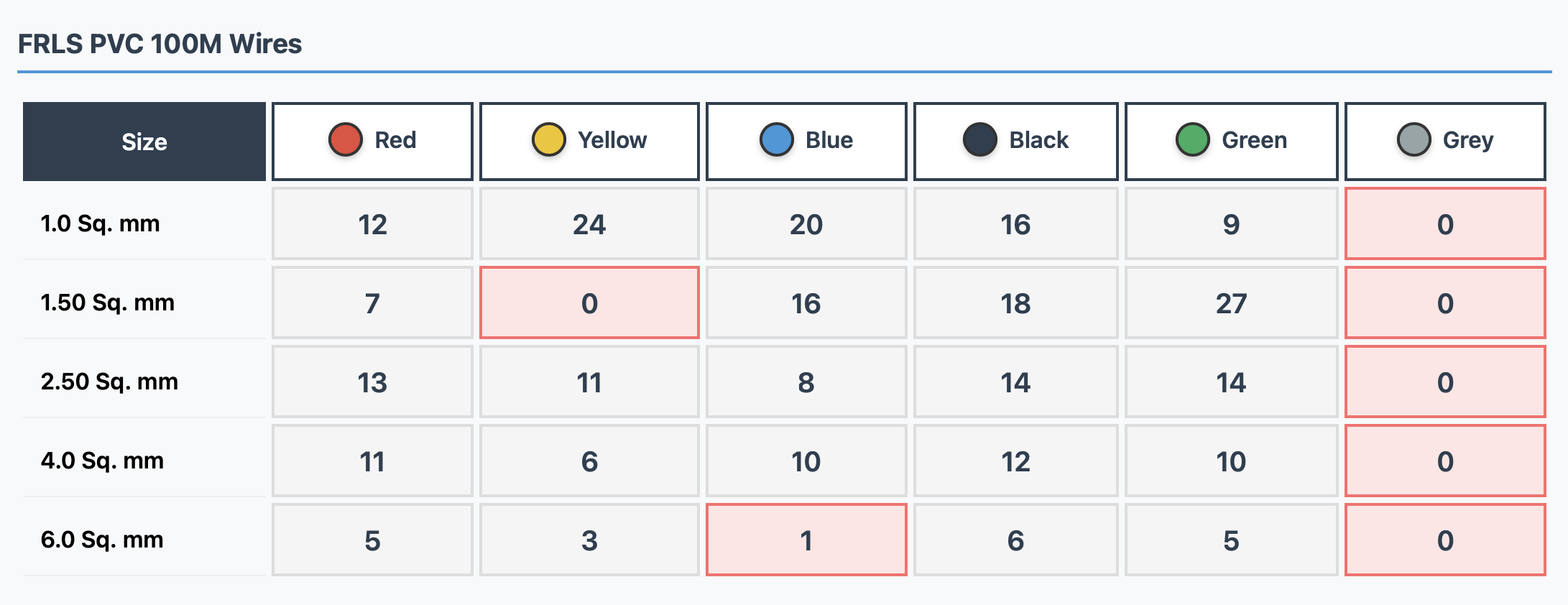
A browser-based dashboard for cable and wire distributors. It reads Tally’s built-in XML API and runs on the same Windows machine, without a plugin or data migration.
An Axum server queries Tally over HTTP/XML. The browser runs the Rust analysis engine through WebAssembly. Deployment is a single executable and a static folder; operation does not require an internet connection.
Archived project. Not under active development.
Connected existing CCTV feeds to local detection and tracking, logging arrivals and departures as searchable events and sending Telegram alerts.
Built in Rust with YOLO v11 segmentation, CLIP, ONNX Runtime, and RTSP / FFmpeg. Tracking combined Hungarian assignment with visual re-identification.
Included here as an example of previous computer-vision deployment work.
Engineer & founder
Avant Garde Labs
I was an engineer at Microsoft and Amazon, built two startups, and spent more than a decade running an electrical distribution business.
Several of the systems here began as tools for that business. Working with the people using them shaped how I approach software: understand the workflow, account for the existing systems, and follow through on deployment.
My background also includes production Rust infrastructure and Solidity and Cairo smart contracts on Ethereum and Starknet.
More work on GitHubWe discuss the workflow, existing environment, and what you need delivered.
A fixed scope for a defined build, or a contract for work within your team.
Regular progress reviews, deployment in the agreed environment, and documentation for the team running it.
Tell me what you’re building, what’s already in place, and where you need help. An outline of the scope and timeline is a useful starting point.
automation@avantgardelabs.inAI development · Fixed-scope builds · Embedded / FDE contracts